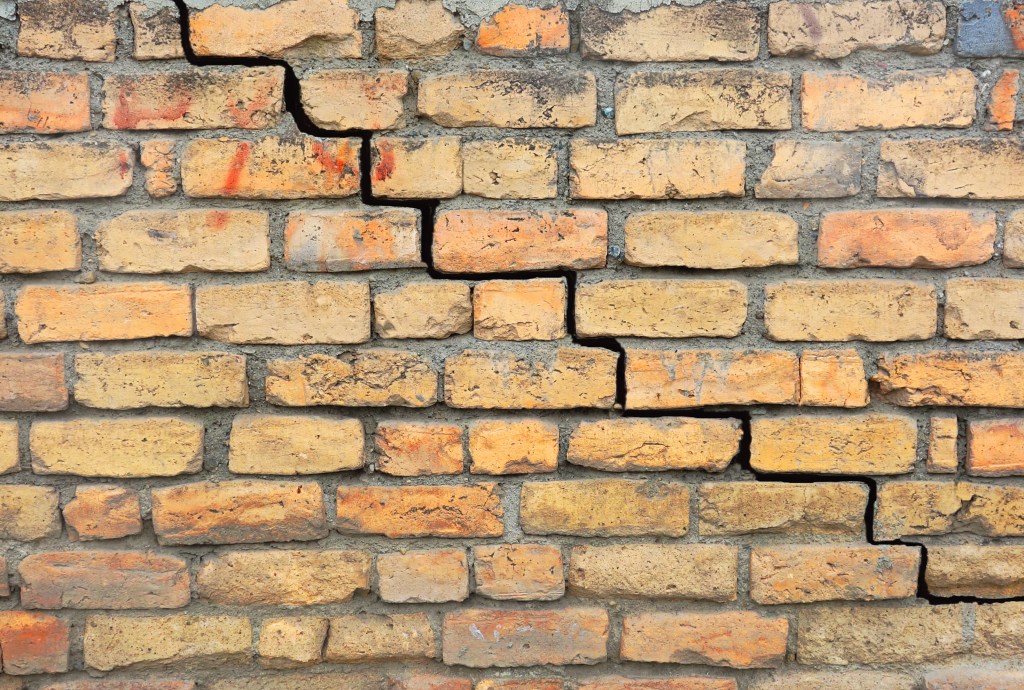
Cracked bricks on house exteriors are a common concern for homeowners. Not all cracks are equal and mean your house is falling apart. Statistically, around 25% of all homes will experience minor structural issues.
What Causes Bricks to Crack and How Can It Be Repaired?
Several factors can cause brick walls to crack. Some are minor, while others can indicate serious foundation problems.
Settlement
Over time, houses naturally settle into the ground. This can cause small vertical cracks in bricks and mortar. This is going to happen at some point naturally.
Fix: Minor cracks can be filled with mortar by a local mason for best results.
Soil Shifting
Clay soil expands when wet and shrinks when dry. This puts pressure on your bricks. This is common in areas with extreme seasonal changes. St. Louis County and surrounding areas are great examples of this.
Fix: Improve drainage and consider foundation stabilization if shifting is severe. Have a landscaper come inspect the area to prevent water pooling.
Hydrostatic Pressure
Excess water in the soil puts pressure on foundation walls, which can lead to cracks in the future. This is often caused by poor drainage or heavy rain. If you have poor drainage or water pooling around your home, it’s crucial to get that fixed.
Fix: Install drainage systems like French drains or sump pumps.
Old Age
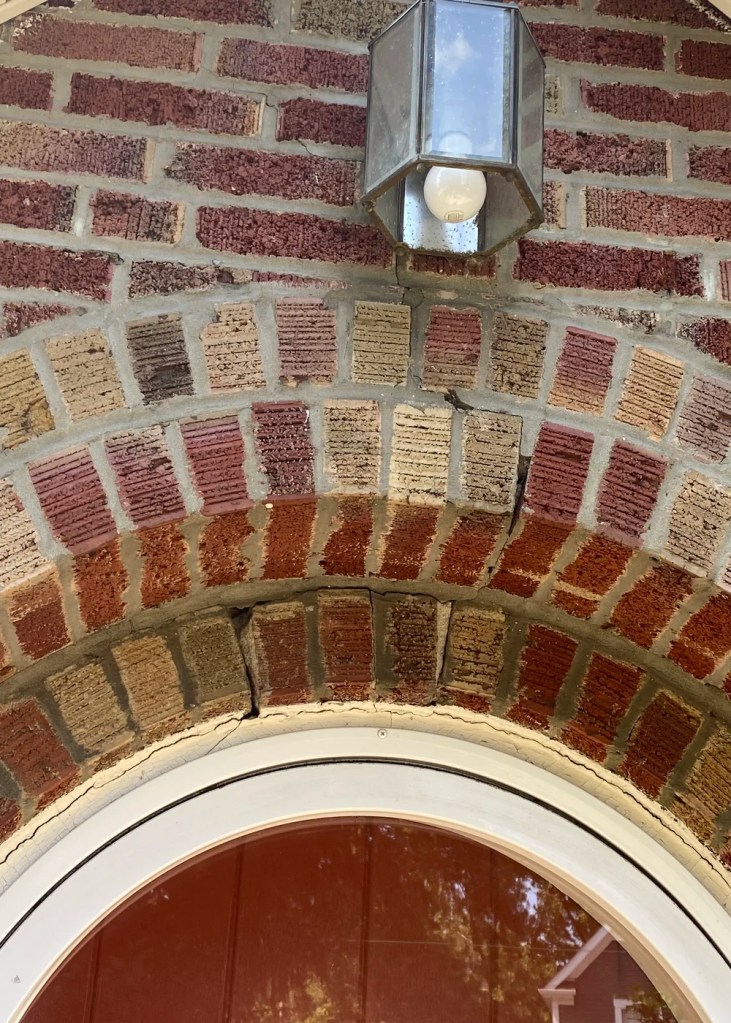
Bricks naturally deteriorate over decades, leading to cracks. Harsh weather speeds up wear and tear. Our St. Louis freeze-thaw-cycle deteriorates mortar joints extra quickly. Proper maintenance can help slow the deterioration process.
Fix: Replace aging bricks and mortar joint repair. Have your brickwork inspected every 1-3 years as preventative maintenance.
Water Damage
Water seeping into bricks weakens their structure, causing cracks. Can result from clogged gutters, leaks, or poor sealing. I’ve seen chimneys start to pull away from houses allowing easy access for water to get in through the cracks.
Fix: Keep gutters clean, apply waterproof sealant, and replace damaged bricks.
Thermal Expansion
Heat makes bricks expand. Cold makes them shrink. In St. Louis, our hot summers and cold winters stress your bricks more than usual.
In St. Louis, we get extremely hot summers and brutally cold winters. This can speed up the deterioration process.
Fix: Install expansion joints and use flexible mortar.
Plant Infestation
Tree roots can shift soil, causing foundation movement and cracks. Vines and ivy trap moisture, weakening bricks and mortar as well. I’ve seen brick patios get destroyed by growing tree roots in St. Louis County.
Fix: Trim or remove invasive plants and improve foundation support.

What Are the Different Types of Brick Cracks and Their Meanings?
The pattern of a crack can reveal its cause and severity.
Horizontal Cracks
Often caused by soil pressure or foundation shifting. If severe, could indicate structural problems. This is the worst crack to get out of the three.
Could be because of a lack of:
- Expansion joints,
- Foundation movement,
- Hydrostatic pressure or
- Rusting lintels.
Action: Call a foundation specialist if cracks widen over time.
Vertical Cracks
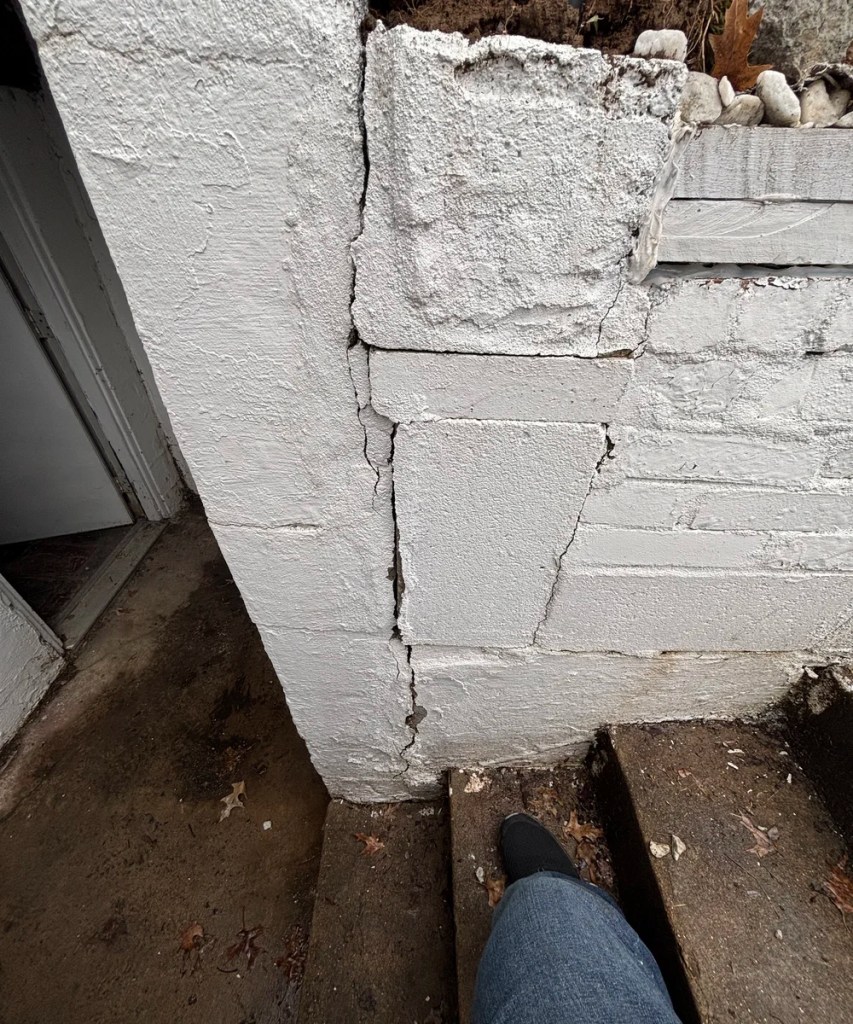
Usually caused by natural settlement or minor thermal expansion. Often cosmetic but should be sealed to prevent water damage.
Action: Fill with masonry mortar if small; consult an expert if large.
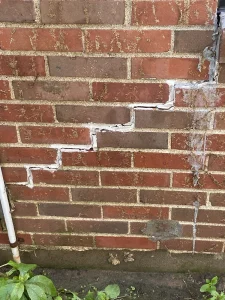
Diagonal or Stair-step Cracks
Common sign of foundation settling or shifting. Typically appear near corners of windows and doors.
Action: Monitor for growth; if widening, consult a professional.
How Do I Know If My Cracked Bricks Are a Sign of Foundation Issues?
Cracks alone don’t always mean foundation trouble, but look for these signs:
- Uneven floors or sloping rooms
- Doors and windows sticking or misaligned
- Gaps between walls and ceilings
- A leaning or cracked chimney
If you notice these along with cracked bricks, your foundation may need repair.
How to Fix Cracked Bricks on a House
Minor Repairs
Small, hairline cracks can be sealed with masonry mortar. You can slow down further damage by applying a waterproofing sealant. The sealant will allow water to bead off of the surface to protect it against the moisture.
Brick Replacements
If bricks are severely cracked, they need to be replaced. A brick mason can carefully remove and install new bricks with matching mortar. The mortar color is impossible to match perfectly. Although a professional can get it very close to perfect. Finding the original brick can be very difficult especially since St. Louis has a lot of older homes. Sometimes the original bricks aren’t made anymore. Going to a local brick company can usually get you an almost perfect match most of the time.

Repair The Foundation
If foundation issues cause cracks, solutions may include:
- Underpinning to stabilize the foundation.
- Wall anchors to fix bowed walls.
- Drainage improvements to prevent water-related cracking.
How Much Does Cracked Brick Repair Cost?
Cracked brick repair prices varies depending on a lot of factors. Depends on the kind of repair needed, the location of the repair, and how large the repair area is. These costs below are very generic but a good starting place…
Minor Repairs
Typical minor repairs can cost somewhere between $250 – $750. Consult a local St. Louis tuckpointing company for more details.
Brick Replacement
Brick replacement can cost between $500 – $2,500. It can depend on the number of bricks and many other factors.
Foundation repair
This kind of repair can cost between $3,500 – $15,000 (if serious foundation issues exist). Prices vary depending on a lot of factors. Consult with a foundation repair specialist for a detailed estimate.
When Should I Call a Professional About My Cracked Bricks?
- If cracks are wider than ¼ inch.
- If new cracks appear frequently.
- If cracks are accompanied by sloping floors, sticking doors, or a leaning chimney.
If any of these apply, contact a foundation repair specialist to assess the damage.
FAQs
Are cracks in bricks normal?
Yes, minor cracks from settling or temperature changes are common and usually not serious.
When to be concerned about cracked bricks?
If cracks widen over time, form a stair-step pattern, or come with foundation problems, it’s time to call a pro.
Is it safe to stay in a house with cracked bricks?
Most of the time, yes. However, if cracks are severe and linked to foundation damage, an inspection is recommended.
Is there anything you can do to prevent cracks in brick?
- Maintain proper drainage around your home.
- Keep gutters and downspouts clear.
- Seal bricks with a waterproofing solution.
- Trim trees and roots near your foundation.
Protect Your Home with Expert Brick Repair Solutions
Ignoring cracked bricks can lead to serious structural issues. Addressing brick damage early helps prevent costly repairs down the line.
At Uplift Home Enhancements, we provide expert brick repair services. These repairs can help restore your home’s brickwork.
Want to learn more about maintaining your brickwork? Visit our blog for expert tips and advice.