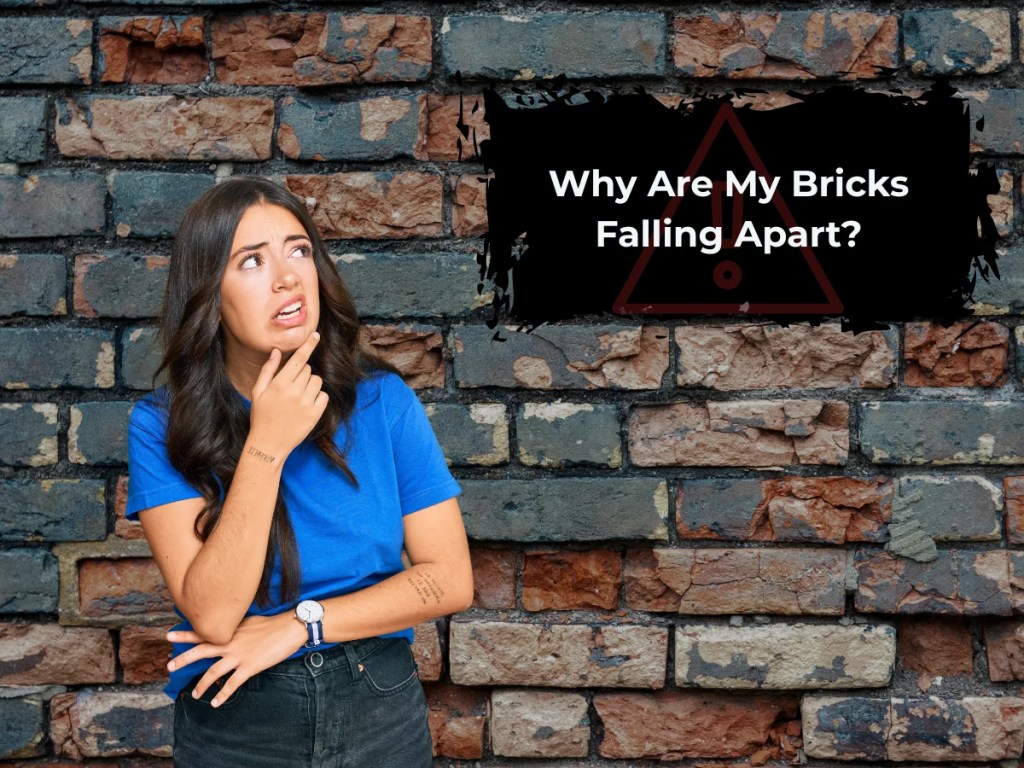
Spalling of brick is one of the most overlooked problems that can quietly destroy chimneys, steps, and walls. At first, it may look like minor flaking—but it’s often a sign of deep water damage that’s already spreading. Bricks should last for decades, but when moisture gets trapped and freezes, they start to break apart from the inside out.
What You Should Know About Spalling of Brick
Spalling of brick happens when bricks flake, crack, or fall apart from moisture.
Freeze and thaw cycles are the biggest cause of brick damage.
Early signs include soft bricks, cracks, and missing surfaces.
Fixing spalling early prevents bigger and more expensive repairs later.
Table of Contents
What Is Spalling of Brick and Why Does It Happen?
Spalling of brick is when the surface of a brick starts to chip, flake, or crumble off. Most people don’t notice it at first—until pieces of brick start falling to the ground or the face of a wall starts looking patchy and rough.
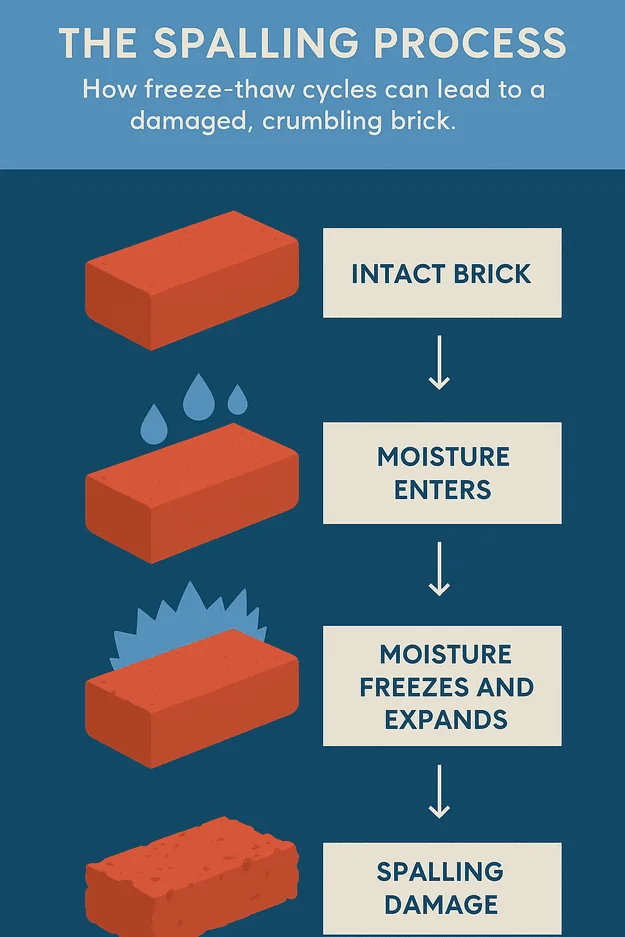
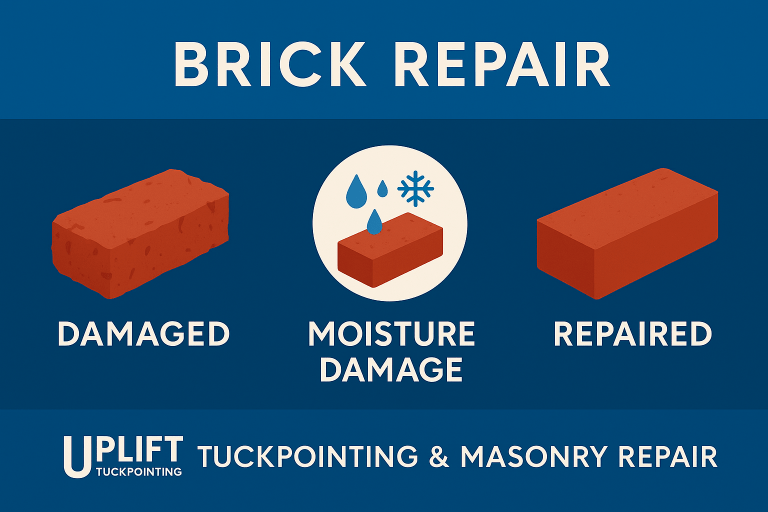
Many homeowners ask, what is spalling brick? It’s simple: moisture gets inside the brick. When it freezes, it expands. That pressure forces the outer layer of the brick to break apart. If left alone, the damage spreads deeper and wider, affecting nearby bricks and mortar too.
We fix spalling problems like this all the time. If you’re dealing with it now, check out our brick repair service page to see how we help homeowners across St. Louis keep their homes strong and safe.
What Does Spalling of Brick Look Like?
You’ll notice:
- Bricks that are flaking or peeling
- Thin surface cracks that turn into deeper damage
- Brick faces falling off
- Soft or chalky spots
- White powder or small red chunks on the ground
One homeowner told us they didn’t know their chimney was spalling until they saw broken brick pieces in their yard. When they looked up, entire corners of the chimney were missing.
What Causes Spalling of Brick in Homes?
There are a few common brick spalling causes:
- Moisture getting trapped inside the brick
- Clogged gutters or poor drainage
- Wrong type of mortar or sealer
- Power washing with high pressure
- Bricks close to soil that stay damp
We’ve seen spalling destroy outdoor kitchens, porches, steps, and chimneys. One outdoor kitchen we repaired had dozens of bricks cracked and crumbling because the homeowner waited too long to get help. If they had called sooner, it might have been a few brick repairs. But after years of neglect, it turned into a full replacement.
Why Freeze-Thaw Cycles Are the #1 Cause
This is the biggest reason for spalling. Water gets in. Then it freezes and expands. That expansion pushes against the brick and creates tiny cracks. When the ice melts, it leaves room for even more water. Then the cycle repeats—and the damage gets worse every time.
Other Common Triggers Like Salt, Sealants, and Cleaning
- Salt (from de-icing or soil) pulls moisture into the brick
- Non-breathable sealants trap water inside instead of letting it escape
- Power washing with too much pressure strips away the protective surface
We’ve also seen homeowners apply the wrong kind of caulking to cracks. It might help for a few months, but it doesn’t fix the root problem—and the damage keeps spreading underneath.
Signs You Might Have Spalling of Brick Around Your Home
If you’re not sure what to look for, here are the most common signs of spalling of brick damage:
Common Areas Where Spalling Happens First
Pay attention to these places:
- Chimneys
- Porch steps
- Areas under leaky gutters
- Lower half of walls
- Bricks near soil or mulch
If any area stays wet often or freezes during winter, it’s at high risk.
How to Tell the Difference Between Normal Wear and Spalling
Old bricks might fade or discolor over time—that’s normal. But spalling of brick is more serious. Run your fingers over the bricks. If the surface feels soft, flaky, or you see hairline cracks that spread, that’s spalling.
One tip: look at spots that stay wet longer than others. That’s often where spalling begins.
Is Spalling of Brick Dangerous or Just Cosmetic?
Not all brick damage looks serious—but even small cracks may point to deeper issues. Here’s what makes spalling of brick risky.
When It’s Just Ugly vs When It’s Structurally Serious
Spalling might look harmless at first. But when it spreads or affects corners, steps, or chimneys—it becomes a real structural issue. We’ve repaired chimneys where one broken brick turned into a full rebuild because nearby bricks were also weakened and falling apart.
Are spalling bricks dangerous? Yes—especially if they’re holding weight. Don’t take the risk.
Can Spalling of Brick Cause Mold or Health Issues?
Yes. Moisture from spalling can move into your walls and cause hidden mold—especially in basements or around windows. Mold isn’t just an eyesore—it can harm your air quality and lead to health issues for your family.
How to Fix Spalling of Brick the Right Way
Repairing spalling of brick correctly depends on the damage. Here’s what homeowners should know before starting the process.
Simple Repairs for Minor Brick Flaking
If the damage is small, we can remove the flaky bits, clean the area, and add new mortar. We match the color to blend it in so your wall looks like nothing ever happened.
When to Replace vs When to Repair Bricks
If a brick is soft, deeply cracked, or missing pieces, it should be replaced. We’ve replaced entire chimney caps and porch fronts where the damage was too far gone. Catching it early is always cheaper.
Should You Call a Mason or Do It Yourself?
Some homeowners try to patch cracks with caulk or mortar. But we’ve seen these DIY fixes fail—fast. If it’s one loose brick and you’ve got the tools, you might be fine. But anything more? Call a pro.
At Uplift, we’ve re-done DIY jobs that didn’t last through one winter.
Is Spalling Brick Covered by Insurance?
This section breaks down what might be covered—and what won’t be.
When Homeowners Insurance Might Pay for Repairs
Is spalling brick covered by insurance? Sometimes. If it was caused by a sudden event—like a storm, impact, or frozen pipe—your policy might cover it. But if it’s due to age or poor maintenance, insurance usually won’t help.
What Insurance Companies Usually Look For
They want to know:
- Was the damage sudden or gradual?
- Could it have been prevented?
- Was water involved from a leak or storm?
Tip: take photos and document everything if you plan to file a claim.
How to Prevent Spalling of Brick from Coming Back
The best way to deal with spalling of brick is to stop it before it spreads. Here’s how to protect your home long-term.
Why Breathable Sealants Are Key
Seal your bricks with a breathable product. It keeps water out but still lets moisture inside escape. That balance protects your brickwork for the long haul.
Gutter Maintenance and Proper Drainage Tips
Keep gutters clean. Fix downspouts. Make sure water flows away from your home. Overflowing gutters are one of the top causes of spalling we see.
Annual Brick Inspections for Early Warning Signs
Walk around your home in spring and fall. Look at your brick walls, chimney, and steps. Find cracks early, before they become full repairs. One small repair now could save you thousands.
Here’s a quick visual test: Check for any hairline cracks in bricks or spots that stay wet for long periods. These are early warning signs of spalling.
Final Thoughts on Spalling of Brick for Homeowners
Whether you’re seeing cracks or flaking, understanding spalling of brick early can help you avoid bigger issues down the road.
Don’t Wait Until the Damage Spreads
Most homeowners don’t realize anything’s wrong—until they see brick pieces on the ground. If you notice flakes, cracks, or crumbling, take it seriously. The longer you wait, the more bricks will need to be replaced.
The Cost of Waiting vs Acting Early
We’ve fixed small spalling jobs for under $300. But we’ve also replaced entire porch faces or outdoor kitchens where repairs were delayed. Depending on the scope of damage caused by delayed spalling of brick repairs, costs can range between $1,000 to $3,500 on average. Acting fast protects your home—and your wallet.
Worried About Spalling of Brick? Let’s Take a Look
At Uplift Tuckpointing & Masonry Repair, we handle spalling problems every week—and we know how to fix them right the first time. For more helpful guides, repairs, and maintenance tips, visit our full brick and masonry blog. If you see brick flaking, cracking, or falling apart, schedule your free estimate today. We’ll inspect your home and give you expert advice without pressure.